Welcome to Goode Questions
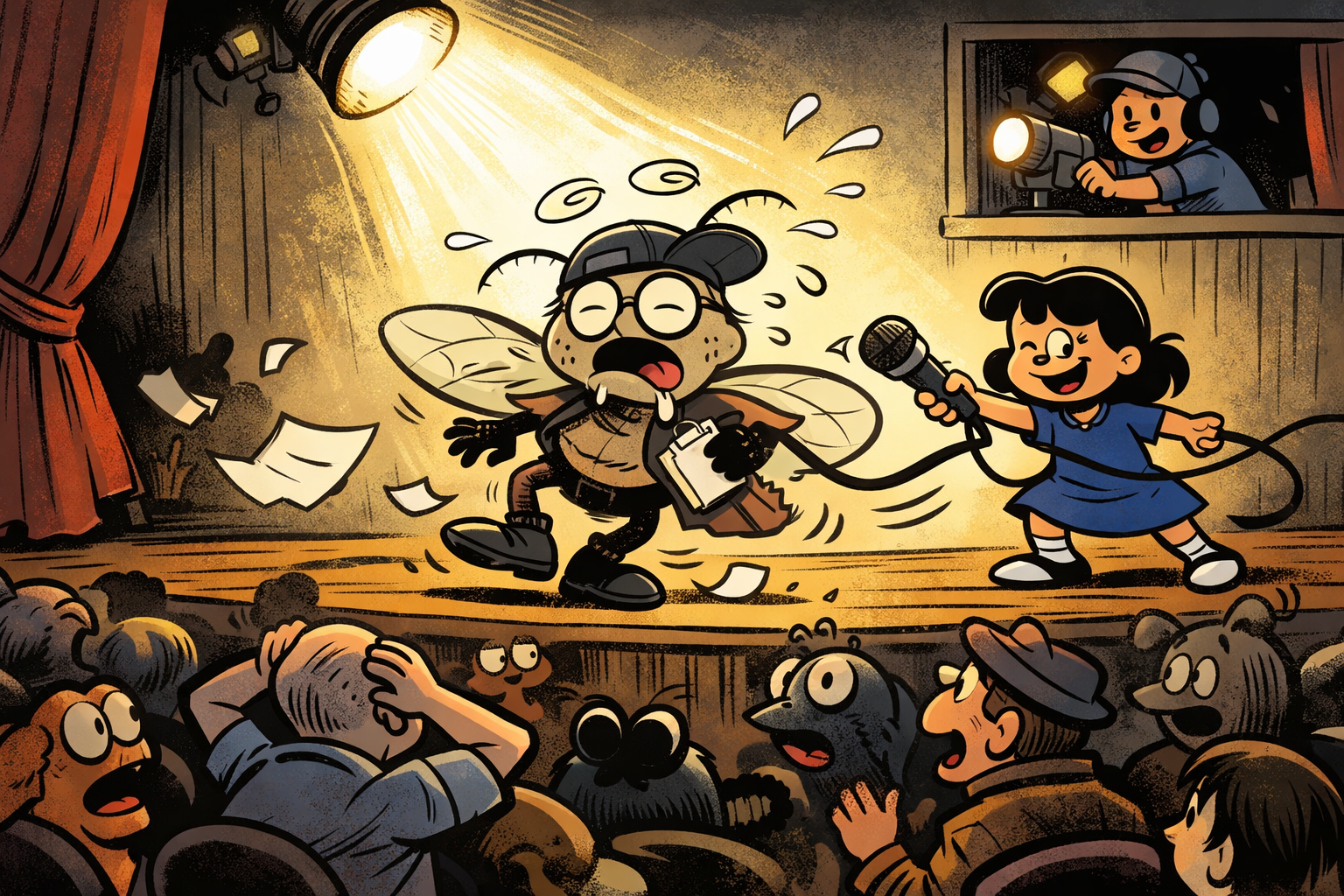
Welcome to Goode Questions — a space for people who feel life tapping them on the shoulder. Here, we slow down. We listen inward. We turn lived experience into something shaped, honest, and worth sharing.
A Goode Question: What story have you been carrying that’s finally ready to be heard?
Where the Story May Lead
I would love to show the actual videos of the nights when I will tell stories on stage (or choke), but I will do my best to show the ones I can. However, I will try to update individual videos about how the event may have been seen!
Here’s A Damn Goode Question?
The Goode Question:
Where would you like your story to begin today?
This is the part of the site where you can step in, explore, and start shaping your own narrative. You don’t need a plan. You don’t need the perfect words. You just need a place to begin — and this is it.
Choose Your First Step
1. Explore a Story Prompt A single, gentle question to help you notice something true in your life. Click to open a prompt, sit with it, and see what rises.
2. Share a Thought Use the contact form to send a reflection, a moment, or a question. You don’t need a full story — just a spark.
3. Read a Goode Question Browse the growing archive of reflective questions that help people uncover the stories they’ve been carrying.
4. Follow the Journey See updates from StorySLAM nights, chapbook progress, and new storytelling experiments as they unfold.
Why This Matters
Stories don’t begin with a performance. They begin with a moment — a memory, a feeling, a shift. This section is your invitation to find that moment.
A Final Goode Question:
What small truth in you is asking for a little attention today?
A Final Goode Question:
What small truth in you is asking for a little attention today?
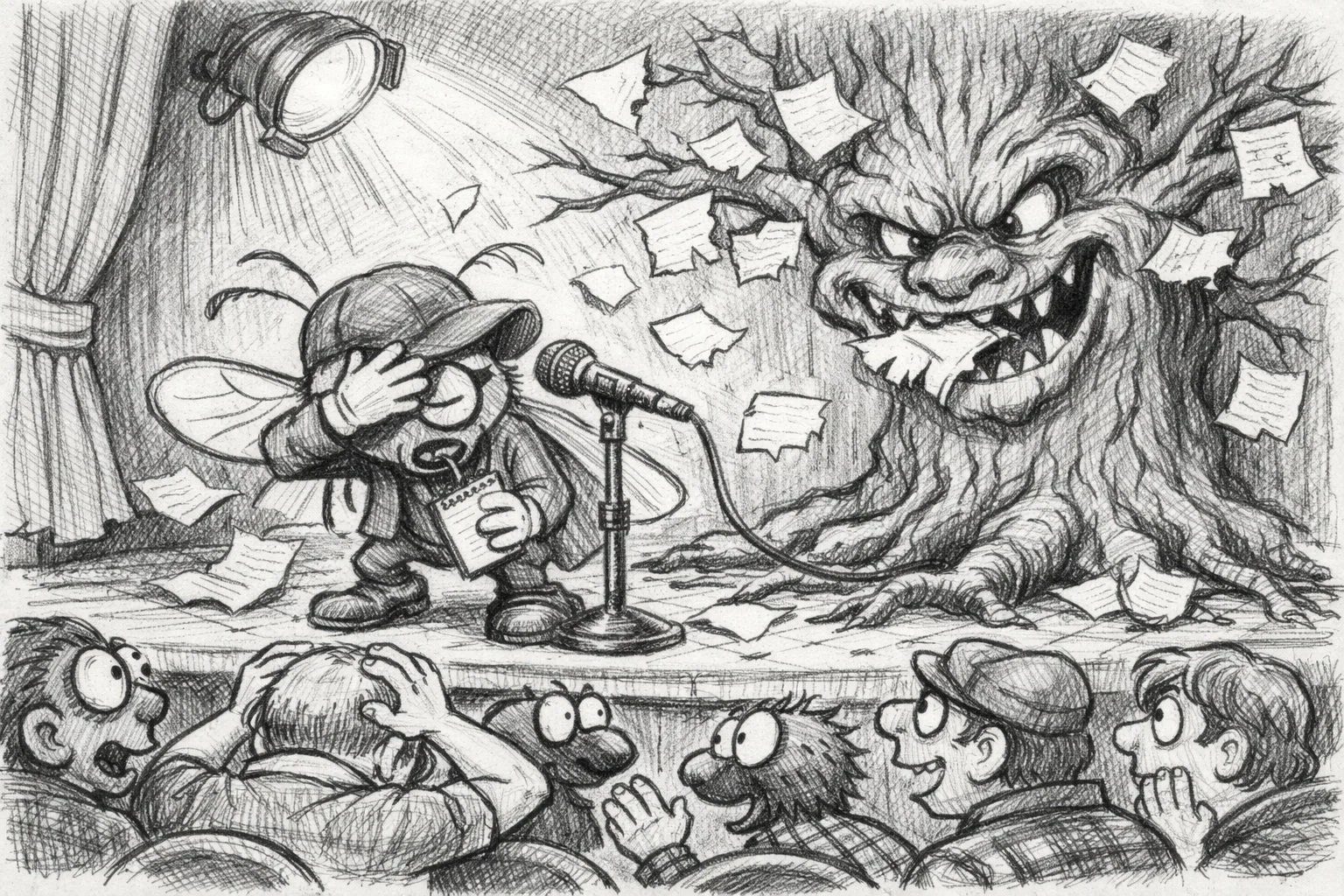
“The hardest part when telling a story in a live environment? Always stepping away from the ego that desperately wants to own a performance. Be yourself; the rest will follow in time, and an enduring passion to share your stories with the world!
—Eric W. Goode—
“Every detail was thoughtfully attempted to entertain us.”
—A Former Storytold Patron—

Did I say the Food was really freaking Goode?
—Eric W. Goode—
The Weather in Your Pocket
A story written by a man and a machine, about what the machines are being told to do to the man. Read it alone. That's the point.
The train was late, so he did what everyone does when a minute goes unclaimed: he reached for the weather in his pocket.
That's what his grandfather would have called it, probably, if his grandfather had lived to see it — a little glowing pane of weather. Not rain and sun. The other weather. The forecast of the world's mood, updated every second, delivered warm into the palm.
Tonight the forecast was war.
PROPHETS, EXPERTS, AND EVEN AI AGREE: THE SIGNS POINT TO A THIRD WORLD WAR.
He read it standing on the platform in his work boots, lunch pail hanging off two fingers, and he felt the small cold drop of it go down through his chest the way it always did. Ezekiel was quoted. A retired general was quoted. A chatbot was quoted, which struck him as strange — like asking a mirror to predict a fistfight — but the strangeness didn't stop the cold drop. Nothing ever stopped the cold drop. That was the thing about the weather in his pocket. It always found the chest.
He scrolled.
Collapse of the grid. Collapse of the dollar. Collapse of the ice, the bees, the birthrate, the border, the church, the family, the truth itself. Each headline a stone laid neatly on the last, and him standing under the pile like it was his job to hold it. In a way it was. Somebody had to read all this. Somebody had to know. Wasn't that the responsible thing — to know?
The train came. He got on. He kept scrolling.
Here is something the man on the train did not know, because it was never printed in the weather:
Four hundred miles away, in a building with very good air conditioning, the pile of stones had a name. It was called a content vertical. It had a performance dashboard. The prophecy piece — the one with Ezekiel and the general and the chatbot — was, at that moment, doing numbers. A young analyst noted its "engagement velocity" and flagged the format for repetition. Nobody in the building believed the world was ending. The world ending was, in fact, the last thing anyone in the building wanted, because the world was where the numbers lived.
They did not hate the man on the train. It's important to say that. Nobody hated him. Nobody thought of him at all, and that was the whole trouble. He was not a reader to them. He was a duration. He was a scroll-depth. He was eleven seconds of attention that could be sold to a mattress company, and the surest way to hold a man for eleven seconds is to show him the end of everything he loves.
This is very old knowledge dressed in new clothes. The men who built the first fear-machines out of pulpits and pamphlets knew it. Fear is the cheapest fuel there is. It burns hot, it burns fast, and the burned come back shivering, asking for more heat.
The man on the train came back every night. He thought he was staying informed.
He was staying lit.
His grandfather had worked a river once — a real one, water and stone — and told him a story he'd mostly forgotten. Upstream from the mill town there'd been a spring flood one year, and the debris came down all at once: fence posts, feed sacks, a dead cottonwood, somebody's porch chair. It jammed in the narrows and made a dam of trash, and the river, which had run one true way for ten thousand years, backed up and went sour and started cutting sideways into good land.
"Here's what nobody understood," his grandfather said. "The river wasn't broken. The river was doing exactly what water does. It was the blockage that was wrong. And the men who finally fixed it didn't fight the river. They just pulled the trash, one piece at a time, until the water remembered where it was going."
The man on the train had loved that story as a boy and could not now say why, and anyway his stop was next, and anyway the phone had just informed him that a famine was possible, a strongman was rising, and a celebrity had said something unforgivable, and the cold drop went down through his chest for the fortieth time that day, and he was so tired. He was so tired and he did not know that the tiredness was the product. That somewhere a dashboard registered his exhaustion as loyalty.
Now.
Set the story down a moment — not the phone, the story — and notice something.
You have been reading about a man being fed fear on a screen, and you have very likely been reading it on a screen, and somewhere in the last few minutes you may have felt the small cold drop yourself, because this story used the same tools the weather uses. It stacked the stones. Collapse of the grid, the dollar, the ice, the bees. Did you feel the pile? That was deliberate. It cost nothing to write and it worked on you at least a little, and it was done by a man thinking his thoughts out loud with a machine helping him type — the same species of machine the headline trotted out as a prophet of war.
So here is the question this story was built to leave you alone with, the way you'd leave a lantern with someone in a dark house:
If it's this easy — if a stranger and a machine can pull the cold drop through your chest in five minutes flat, on purpose, and tell you so — what is being done to you by the ones who profit from never telling you?
Not asked to shame you. The craving is not your flaw. You are built to watch the horizon for smoke; every one of your ancestors who ignored the smoke is nobody's ancestor. The wrongness is not in you. The wrongness is the trash jammed in your river — the machinery that found the oldest instinct you own and strapped a meter to it.
You are not broken. You are dammed.
The man got off the train. It was a cold night and clear, and for no reason he could name — maybe the grandfather story, maybe just a dead battery of the soul — he did not reach for his pocket on the walk home. And the strangest thing happened, which was nothing. No famine arrived in the eleven minutes he went unwatched. No war began because he wasn't monitoring it. The world, unread, went on being the world: porch lights, wet leaves, a dog complaining somewhere about a squirrel it would never catch, ten thousand ordinary mercies that will never trend because peace does not clip well.
He stood at his own front door a moment before going in, and felt something he almost didn't recognize, it had been so long.
It was quiet in his chest. The drop had stopped dripping.
That's all. That's the whole ending. Nobody defeated anything. He just noticed the meter on his fear, and a noticed meter never quite works the same again.
The river doesn't need a hero. It needs hands pulling trash, one piece at a time, until the water remembers.
One piece is now in your hands.
Goode Storytelling Signature
A Goode Storytelling piece by Eric W. Goode, created with AI support.
by Eric W. Goode, a man that cares, and AI, machine language that help that same man bring hope along with him, not doom!
What I Want To Do!
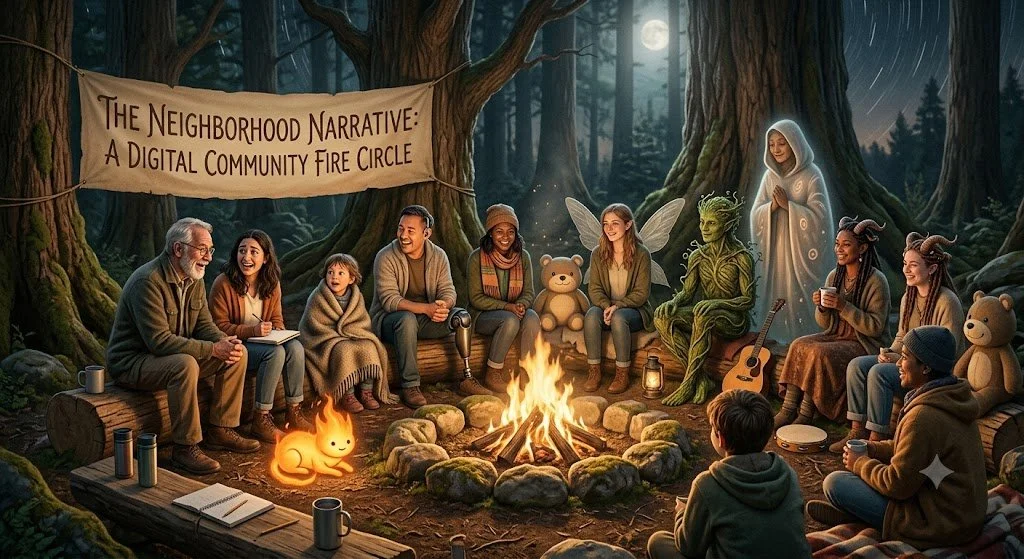

Stories: Why Did They Have To Tell Stories
What would we do without them?
Have a question, collaboration idea, or just want to say hi? Send us a note—I will try to be there to help.